
Seasons in Australia: Year-Round Guide for International Students
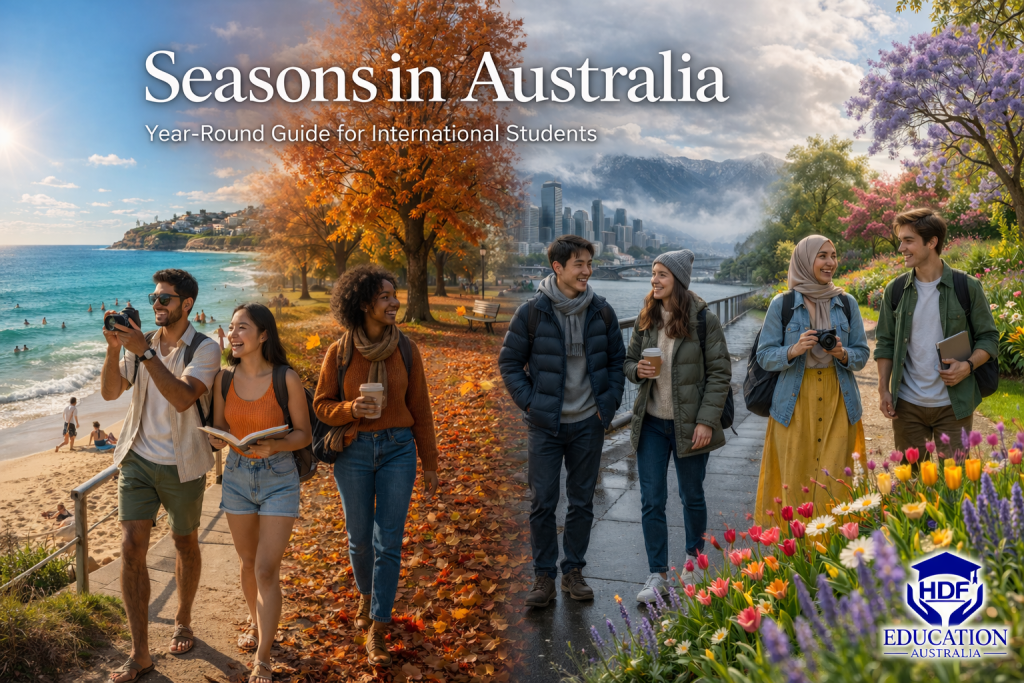
Welcome to all international students who are planning to live or study in Australia.
Moving to a new country is an exciting step toward achieving your academic and career goals. Alongside your studies, adapting to a new environment is just as important. And one of the biggest adjustments is understanding the seasons in Australia.
As a country located in the Southern Hemisphere, Australia experiences seasons that are completely different from many parts of the world. From warm summer Christmas celebrations to mild winters, each season brings unique experiences.
Understanding these seasonal changes will help you prepare better – from what to pack to how to plan your studies, travel, and daily life. It also helps you choose the right time to arrive and settle in smoothly.
Let’s get started.
Table of Contents
Australian Weather Overview
Australia’s seasons are reversed compared to countries in the Northern Hemisphere. So, if you’re wondering what season is it in Australia, the answer will often be the opposite of what you’re experiencing back home.
So, What Are the Seasons in Australia?
Australia follows a four-season calendar, with each season lasting three months:
- Spring: September, October, November (Transition months)
- Summer: December, January, February (Hottest months)
- Autumn: March, April, and May (Transition months)
- Winter: June, July, and August (Coldest months)
These seasonal shifts are important for international students in Australia because they affect everything, from what you pack to how you plan your study schedule.
Australia’s Climate: A Land of Contrasts
Australia is known for its diverse and sometimes extreme climate.
- Central desert regions can exceed 40°C in summer
- Alpine regions in the southeast can drop below 0°C in winter
- Some cities (like Melbourne) can experience four seasons in one day
For students heading to Perth, WA, the climate is more stable and predictable. Perth has a Mediterranean climate, meaning:
- Hot, dry summers
- Mild, wet winters
- Plenty of sunshine throughout the year
This makes Perth one of the most comfortable cities for international students to live and study in.
Wet Season vs Dry Season (Northern Australia Explained)
In addition to the four main Australian seasons, parts of northern Australia follow a different pattern:
Wet Season (November – April) | Dry Season (May – October) |
· High humidity · Heavy rainfall and storms · Risk of cyclones in some regions | · Clear blue skies · Warm days and cooler nights · Lower humidity and minimal rainfall |
While this mainly affects northern regions like Darwin and Cairns, it’s useful for students planning travel across Australia.
Once you know the weather and climate pattern, next we’ll look at each season in detail.
Year-Round Seasons in Australia Explained: What International Students Need to Know
Because Australia follows a Southern Hemisphere climate, each season brings a distinct change in weather, lifestyle, and student experience. Let’s break down each season in detail so you know exactly what to expect throughout the year.
1- Spring in Australia (September – November)
Spring season in Australia marks the transition from winter to warmer months. If you’re wondering when is spring in Australia, it begins in September and continues through November.
What the Weather in Spring Feels Like
- Gradually warming temperatures (around 15°C to 25°C in most cities)
- Longer daylight hours
- Lower humidity compared to summer
- Fresh, blooming landscapes
In Perth, spring is especially enjoyable, with sunny days, cool mornings, and minimal rainfall. This makes it one of the best times for new students to arrive.
What Spring Season Means for International Students
- Ideal time for orientation and settling into campus life
- Comfortable weather for walking, commuting, and exploring
- Great balance. Not too hot, not too cold
You’ll also notice a more active lifestyle during this season, with students spending more time outdoors.
Lifestyle & Experiences
You’ll get to see blooming flowers and greenery across cities. Seasonal fruits like strawberries, mangoes, and cherries become more available. Popular for outdoor activities are cycling, walking, and sightseeing.
Things to Be Aware Of
- Magpie season: Birds may swoop, especially near parks
- UV exposure: Sun can still be strong so sunscreen is essential
- Early spring (September) can still feel slightly chilly
Overall, spring is one of the easiest seasons to adjust to as a new student. As temperatures continue to rise, it naturally leads into the hottest and most energetic time of the year – summer.
2- Summer in Australia (December – February)
Summer is vibrant and exciting, but it can also be intense. If you’re asking, what season is it in Australia during December, it’s summer. It’s very different from winter holidays in many countries.
What the Summer Weather Feels Like
- Hot temperatures (20°C to 35°C+, especially in Perth)
- Long sunny days
- Very low rainfall in southern cities like Perth
- High humidity and storms in northern regions
In Perth, summers are hot and dry, often reaching above 30°C, with consistent sunshine.
What It Means for International Students
- Often overlaps with semester breaks or holidays
- Time for travel, internships, or part-time work
- Increased social events and outdoor activities
Lifestyle & Experiences
You’ll explore the beach culture (swimming, surfing, barbecues), festivals, events, and holiday celebrations. Christmas and new year are celebrated in summer.
Important Safety Tips
- Australia has one of the highest UV levels in the world
- Always use SPF 50+ sunscreen, hats, and sunglasses
- Stay hydrated and avoid midday sun
- Be aware of heatwaves and bushfire risks
If travelling north:
- Expect wet season conditions (rain, storms, humidity)
- Be cautious of marine stingers (jellyfish)
As temperatures begin to drop, the environment becomes more comfortable which leads to autumn.
3- Autumn in Australia (March – May)
Autumn is often considered the “sweet spot” season. It’s comfortable, balanced, and student-friendly. If you’re wondering when is autumn in Australia, it begins in March and continues through May.
What the Autumn Weather Feels Like
- Mild and stable temperatures
- Warm days and cooler evenings
- Less extreme heat compared to summer
In Perth, autumn is known for its pleasant and balanced weather, making it one of the most comfortable seasons of the year.
What It Means for International Students
- Ideal for focused study and routine building
- Comfortable commuting and outdoor movement
- Less weather-related stress
Lifestyle & Experiences
You see beautiful autumn colours in southern regions. It’s a great time for travel, hiking, and outdoor activities. Popular festivals and events are celebrated across Australia.
Things to Note
- Nights can start getting cooler so light jackets are useful
- Weather becomes more unpredictable toward late May
As temperatures continue to drop, it transitions into the coolest time of the year – winter.
4- Winter in Australia (June – August)
Winter may feel quieter and cooler, but it’s also a great time to focus on studies and explore different parts of Australia. If you’re asking when does winter start in Australia, it begins in June and lasts until August.
What the Winter Weather Feels Like
- Cooler temperatures (5°C to 15°C in southern cities)
- Cold mornings and evenings
- Rainfall increases in cities like Perth
In Perth, winters are mild and slightly wet, not extreme compared to many countries.
What It Means for International Students
- More indoor-focused lifestyle
- Increased focus on academics
- Need for warm clothing and layering
Lifestyle & Experiences
There are snow activities in alpine regions (Victoria & NSW). Whale watching season along the coast. It’s the best time to visit northern Australia (dry season, warm weather).
Things to Prepare For
- Bring jackets, scarves, and warm layers
- Some accommodations may have limited heating
- Shorter daylight hours
As winter ends, the cycle begins again – bringing you back to spring, and a fresh new phase of your student journey.
If you want a smoother, stress-free journey, getting expert support can save you time, money, and unnecessary mistakes. So, read about why hiring an education consultant in Australia can make all the difference.
Now that you understand how each season works, let’s look at how these seasons break down month by month in Australia, so you can plan even more precisely.
Seasons in Australia by Month
Australia’s seasons are tied to the calendar, not to what many students are used to back home.
For international students, this month-by-month pattern matters because it affects when to travel, what to pack, and how to plan your first weeks in Australia. In Perth, that planning is usually a little easier because the climate is more predictable than in many eastern cities.
Here is the simplest way to read the year:
- December to February: Peak summer, strongest sun, beach weather in southern cities, and the wet season in the tropical north.
- March to April: Early autumn, when temperatures become more comfortable and the extreme heat starts to ease.
- May: Cooler days and cooler nights, especially in temperate cities.
- June to August: Winter in the south, while northern Australia is in the dry season and usually feels warm and easier to travel through.
- September to October: Spring begins, days get longer, and the weather warms up again.
- November: Spring continues, but tropical areas start moving back toward the wet season.
For students, summer and winter are not just different temperatures in Australia; they can completely change the way a city feels and how you should plan your routine.
Seasonal Weather by Region in Australia
Australia is a large country, so the weather can feel very different from one city to another. Below, we’ve highlighted the clear differences in temperature and rainfall between major student cities such as Sydney, Melbourne, Brisbane, and Perth.
Quick city climate snapshot for international students
City | Summer feel | Winter feel | Rain pattern | Student-friendly takeaway |
Sydney | Warm, mild summer days Around 25.8°C to 26.0°C | Mild winter days Around 16.4°C to 17.9°C | Rain falls fairly evenly through the year, with wetter summer and autumn months | Good if you want a balanced coastal climate |
Melbourne | Comfortable summer days Around 24.2°C to 25.9°C | Cool winter days Around 13.5°C to 15.0°C | Rain is spread through the year, with slightly wetter late spring and autumn months | Best for students who are fine with cooler, changeable weather |
Brisbane | Hot, humid summer days Around 28.4°C to 29.4°C | Mild winter days Around 20.4°C to 21.8°C | Summer is the wettest period, with much drier winter months | Good if you prefer a warmer, subtropical climate |
Perth | Hot summer days Around 29.6°C to 31.7°C | Mild winter days Around 18.5°C to 19.5°C | Very dry summer and wetter winter, with rainfall peaking in mid-year | One of the easiest cities for sunny outdoor living |
Perth as Australia’s sunniest capital city, and Perth’s summer rainfall is extremely low compared with Brisbane and Sydney, while winter rainfall rises sharply.
That means you can expect long sunny stretches, but you still need to prepare for wetter months from late autumn through winter.
Now, let’s move forward to what international students should bring and how they should prepare for Australian weather.
What to Pack for Australia: Weather Tips for International Students
To stay comfortable across the Aussie seasons, focus on layering, sun protection, and seasonal awareness – especially if you’re living in Perth or other major student cities.
➣ Plan Travel by Season
- Visit northern Australia during the dry season
- Explore alpine regions in winter
- Travel comfortably in spring and autumn
➣ Pack Smart & Layer
Bring a mix of light and warm clothing. T-shirts and shorts are ideal for summer, while a jacket, hoodie, and waterproof layer are essential for cooler mornings and winter.
➣ Check Weather Updates
Use reliable sources like the Bureau of Meteorology to stay informed about forecasts, storms, and extreme weather conditions.
➣ Stay Prepared for Heat
Summers can be intense, especially in Perth. Stay hydrated, carry water, and avoid outdoor activities during peak midday heat.
➣ Prioritise Sun Protection
Australia has strong UV levels year-round. Use SPF 50+ sunscreen, wear hats and sunglasses, and cover up when spending long hours outdoors.
➣ Check Accommodation Facilities
Ensure your housing has proper heating or cooling, as this can significantly impact comfort during extreme temperatures.
➣ Be Aware of Seasonal Risks
- Summer: Heatwaves, bushfires
- Wet season (north): Storms, cyclones
➣ Understand Australia’s Unique Climate
Australia’s weather is diverse, and even Indigenous seasonal knowledge reflects patterns beyond the standard four seasons—so stay adaptable.
➣ Remember that Australia also has Indigenous seasonal knowledge
First Australian communities recognise many seasonal patterns based on natural signs, not just the four-season calendar. That is a useful reminder that Australia’s climate is deeper and more varied than a simple month-by-month label.
Your study journey doesn’t start with packing. It starts with getting your visa right. So, must read the Australian student visa requirements before you apply.
What’s the Best Time to Start Studying in Australia?
The best time to start studying in Australia depends on two things: your course intake and the season you will arrive in. In Australia, the main university start periods are usually Semester 1 and Semester 2, and many courses begin in February or March or July. The students can usually start in Semester 1 or Semester 2, and that applications for a mid-year start usually open around April.
Perth has a Mediterranean climate, with hot, dry summers and mild, wet winters, so many students find the most comfortable arrival periods are autumn (March to May) and spring (September to November).
Which intake is best for international students?
- February / Semester 1: best if you want the widest course choice and a fresh start at the beginning of the academic year.
- July / Semester 2: best if you need more time for documents, visa preparation, or English requirements.
- Other intakes: some courses offer different start dates, but these vary by institution and program.
Best season to arrive in Perth
If your goal is an easier adjustment, spring and autumn are usually the most comfortable seasons to arrive in Perth. You avoid the hottest summer days, and you still get enough good weather to settle in, explore the city, and get used to campus life.
Need help choosing the right intake, course, and visa pathway? Feeling unsure about when to start, what to pack, or how to begin your Australia study journey?
Plan Your Study Journey in Australia with HDF Education Australia
Starting your studies in Australia is easier when you have clear guidance from the beginning.
At HDF Education Australia, we help international students make confident decisions about course selection, application preparation, and student visa subclass 500 support. The subclass 500 visa is the visa that allows international students to study at an Australian education provider.
If you are comparing intakes, trying to understand the weather, or feeling overwhelmed by the application process, our support can help you move forward with clarity and confidence.
Get the right advice, prepare properly, and start your Australia journey the smart way.
FAQs
- When is summer in Australia?
Summer in Australia runs from December to February. It is the warmest season of the year, and in many cities the weather can be hot and sunny. The tropical north can also experience its wet season during this period.
- What are the 4 season months in Australia?
Australia’s four main seasons are:
- Summer: December to February
- Autumn: March to May
- Winter: June to August
- Spring: September to November
- When does autumn start in Australia?
Autumn in Australia starts in March and ends in May. It is one of the most comfortable seasons for study, travel, and outdoor activities.
- When does winter start in Australia?
Winter in Australia starts in June and lasts through August. It is the coolest season in southern Australia, while northern Australia is usually in the dry season.
- When is spring in Australia?
Spring in Australia runs from September to November. The weather starts warming up, the days get longer, and many students find it easier to settle into life in Australia during this season.
- Does it snow in Australia?
Yes, it does snow in Australia, but mainly in higher-altitude areas such as the Australian Alps in Victoria and New South Wales. Snow is not common in most major cities, including Perth.
- Which season in Australia is more likely to get cyclones or storms?
The wet season in northern Australia is more likely to bring cyclones, storms, heavy rain, and high humidity. Wet season months are October to April in the tropics.
- What is the coldest month in Australia?
The coldest month in Australia is usually July, especially in southern states and alpine regions.