
Student Visa Processing Time in Australia: Latest 2026 Update
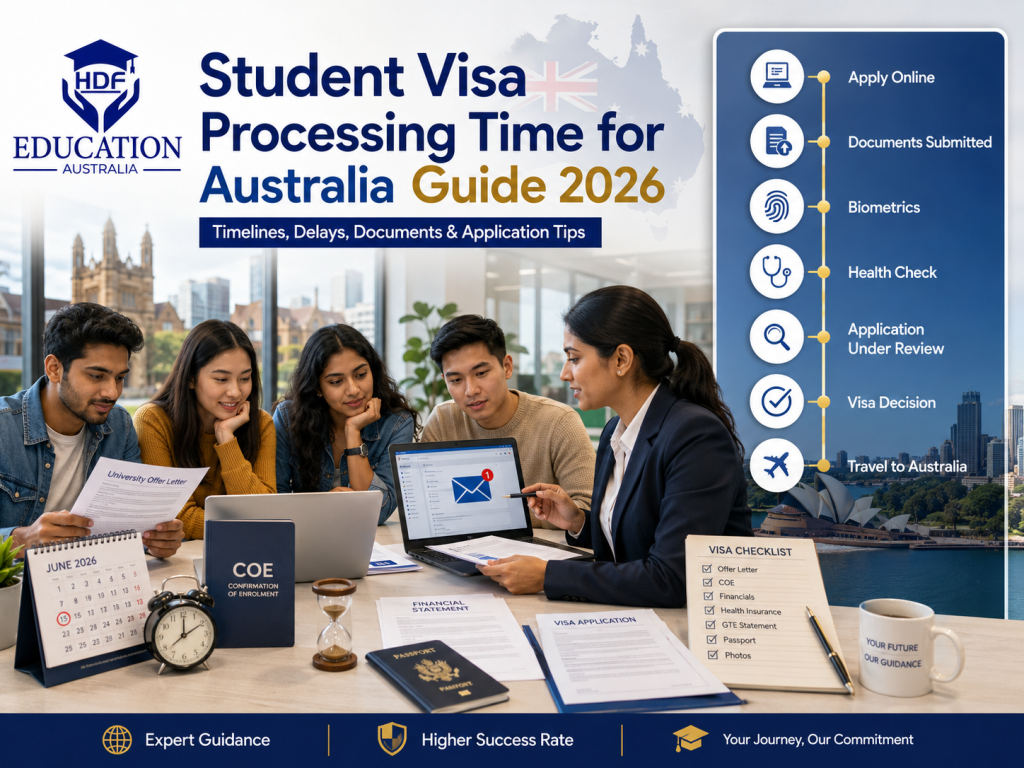
Table of Contents
As of May 2026, the latest month reported by the Department of Home Affairs, the median processing time for an Australian student visa is 19 days. That figure is a midpoint, not a guarantee: some decisions land faster, others take longer, depending on individual circumstances, application quality and processing priorities. Check the Department’s live processing times tool before planning around any published timeframe.
If you’ve searched for student visa processing time in Australia, you probably want one thing: a real number, not a vague range. But that single figure of 19 days does not tell the whole story.
It’s good to know the average processing time, but knowing the reason behind the difference in the amount of time spent is much more valuable for planning your academic path. What you really need to know is the meaning behind the numbers and how to minimise the possibility of unnecessary delays.
This guide explains the current student visa processing times, MD115 priorities, onshore and offshore processing, common causes of delays and practical ways to prepare a stronger application.
What Is the Current Student Visa Processing Time in Australia?
The updated student visa processing times provide an indication of how long recently finalised applications took to process. According to Department of Home Affairs data for May 2026, the median processing time for Student visas was 19 days.
However, this figure should be used as a guide rather than a guaranteed decision date.
A median processing time of 19 days means half of the applications included in the relevant data were finalised within 19 days, while the other half took longer. Your application may be decided sooner or take longer depending on its completeness, complexity, individual circumstances and applicable processing priorities.
The Department updates its global visa processing times monthly. For the most accurate and current information, applicants should always check the official processing time guide rather than relying solely on figures published in older articles.
Check the latest official figures: Department of Home Affairs Visa Processing Time Guide
How Long Does an Australian Student Visa Take?
There is no universal processing period that works for every applicant. As reported by the Department of Home Affairs statistics for May 2026, the median processing time for Student visa applications is 19 days; however, individual applications may take either less or more time than that.
Having your application fully completed with all necessary documents can save you from unnecessary delays. Nevertheless, even the most comprehensive application may take longer due to individual reasons, health/character assessment, extra information request, and other factors.
Here is how the application journey generally works:
Stage | What Happens | Timing |
CoE issued | Institution confirms your enrolment | Before applying |
Application lodged | Application submitted through ImmiAccount | Day of lodgement |
Processing priority applies | Relevant processing arrangements are considered | After lodgement |
Application assessed | Department reviews the application and evidence | Varies |
Further information requested | Additional documents or checks may be required | If applicable |
Visa outcome | Applicant receives the Department’s decision | Varies by application |
With the general timeline covered, it is important to understand why two seemingly similar applications can take different amounts of time.
Why Does Student Visa Processing Time in Australia Vary?
The processing times for student visas in Australia differ because all visa applications are assessed individually. Below are some common factors that will make your visa application differ from the median processing period:
- Application completeness: Failure to submit complete documentation can lead to delays.
- Financial evidence: Financial evidence can take more processing time if necessary.
- Health check: The requirement of health check-ups or further medical checks can influence the processing time.
- Character criteria: Further character check-ups/assessment based on individual merits can be needed.
- Processing peaks: Large number of applications during processing peak periods can influence the processing time.
- Request for Further Information (RFI): If the department requires more information/documents from you, it can take more time to assess your visa application.
- Individual circumstances: Complex visa applications and individual circumstances can require more processing time.
These factors do not necessarily mean that there is a problem with your visa application.
How Does Ministerial Direction 115 Affect Student Visa Processing?
The Ministerial Direction 115 (MD115) dictates the processing priorities of offshore Student and Student Guardian visas. It determines the processing order of the applications by the Department of Home Affairs but will not determine eligibility criteria or assure any specific processing period or decision on the application.
Under MD115, offshore Student visa applications are grouped into three processing priorities.
Processing Priority | Who It Generally Covers | Indicative Processing Commencement |
Priority 1 | Priority cohorts identified by the Department | 1 to 4 weeks |
Priority 2 | Applications meeting the Department’s Priority 2 criteria | 5 to 8 weeks |
Priority 3 | Remaining offshore Student visa applications | 9 to 12 weeks |
These periods indicate when the Department aims to commence processing an application. They are not guaranteed timeframes for receiving a visa decision.
The priority level for some offshore higher education and vocational education and training applicants is influenced by their education provider’s status against its allocated threshold. Other cohorts, including certain school students, postgraduate research students and government-sponsored students, may receive Priority 1 processing under the Department’s current arrangements.
Importantly, MD115 applies to offshore applications. According to the Department, onshore Student visa applications continue to be processed according to existing arrangements.
Processing arrangements and indicative timeframes can change. Applicants should therefore check the latest official guidance before relying on a particular priority or timeframe.
Onshore vs Offshore Student Visa Processing Time
The main difference between onshore and offshore visa processing time is that offshore applications may be subject to the processing priorities established under MD115.
Neither application pathway is guaranteed to be faster.
Factor | Onshore Applications | Offshore Applications |
Applicant location | Applicant is in Australia when applying | Applicant is outside Australia when applying |
MD115 priorities | Do not apply | Apply to relevant Student and Student Guardian visa applications |
Processing order | Existing processing arrangements apply | Priority 1, 2 or 3 may apply |
Key considerations | Application quality and individual circumstances | Priority, application quality and individual circumstances |
Guaranteed timeframe | No | No |
For offshore applicants, processing priority can influence when the Department begins considering an application. However, being placed in a higher priority does not guarantee faster approval or a successful outcome.
Similarly, an onshore application is not automatically processed faster simply because the applicant is already in Australia.
The most reliable approach for either pathway is to submit a complete application, respond promptly to requests and avoid planning around a guaranteed decision date.
How to Reduce Student Visa Processing Time Risk
While you cannot control how long the student visa processing will take, you can avoid unnecessary delays if your application is properly prepared. To minimise the risk of avoidable delays in processing your student visa:
- Apply early: Make your application as early as possible when you are eligible and you have all the necessary documents.
- Submit all your documents: Include all the supporting documents and make sure that the information in them is complete, correct and consistent.
- Submit accurate financial documents: If your financial situation is relevant, make sure the documents submitted are correct and consistent with the information included in your application.
- Complete health assessments on time: Follow the directions from the Department and complete any health assessment required as soon as possible.
- Respond to requests from the Department: Submit any additional information or documents that the Department requests in the stipulated timeframe.
- Check your application: Double-check your application for consistency and errors in the names, dates, declarations and supporting documents.
- Seek an expert migration agent: You may need professional assistance to understand what is expected of your application especially if your case is complex.
Student Visa Application Timeline: From Submission to Visa Decision
The process of Student Visa application can have multiple steps that may differ from one applicant to another.
Step | Stage | What to Expect |
1 | Submit application | Lodge your application and supporting documents through ImmiAccount |
2 | Biometrics | Provide biometrics if required |
3 | Health examinations | Complete any required health assessments |
4 | Department assessment | Application and supporting evidence are assessed |
5 | Further information | Provide additional evidence if requested |
6 | Visa outcome | Receive the Department’s decision through ImmiAccount |
Some applications go through those steps without any additional requirements, while other cases require additional assessment. So, it is recommended to stay up-to-date with the status of the application in ImmiAccount and provide any additional documents, requested by the Department.
Bottom Line
Australia visa processing times can change from month to month, and no published timeframe guarantees when an individual application will be decided. Current processing times could be helpful for planning, however, depending on the complexity of the application, assessment of health and character, processing priorities and other aspects could influence the timeframe. For offshores, MD115 also has to be considered.
The trick here is quite straightforward; get your documents ready, be responsive and set realistic expectations. It won’t speed up your visa process, but will minimise unnecessary complications due to inaccurate or insufficient information provided.
Afraid that visa delays might interfere with your Australian study plans?
Get Clear Student Visa Support by HDF Education Australia
We at HDF Education Australia assist in preparing comprehensive and accurate Subclass 500 visa applications along with providing realistic deadlines advice. Our experts from Perth will examine your documents and Genuine Student response and advise on avoiding common mistakes.
FAQs: Australia Student Visa Processing Time
- What’s the difference between onshore and offshore processing time?
Onshore and offshore applications are processed under different arrangements. MD115 establishes Priority 1, 2 and 3 processing categories for offshore applications, while onshore applications continue under existing processing arrangements.
- How can I check my visa’s processing status?
Log into ImmiAccount to check your application directly. The Department also publishes monthly median processing times, though this reflects recently decided cases, not your specific application.
- What does median processing time mean?
Median processing time is the middle value among recently decided applications; half were finalised faster, half took longer. It is more reliable than an average, since a few unusual cases will not distort it.
- Why is my Student Visa taking longer than expected?
Common reasons include incomplete paperwork, finances that require more verification, and health and character screenings. A Request for Further Information is a common reason for delays.
- Does applying onshore or offshore affect processing time?
Yes. Applying onshore or offshore can affect your visa processing time and assessment. Offshore applications are processed under MD115 priorities, while onshore applications face different requirements and restrictions. However, neither pathway guarantees faster processing or visa approval.
- When should I apply before my course starts?
You should try applying as soon as it is practical and you are eligible and possess all the necessary documentation.